
What You'll Need
Wondering What All You Will Need?
Here is what to buy in year one, plus how hive builds differ. Bees are sold separately. Price depends on the time of year. Budget $200 to $250 per hive for bees on top of equipment.
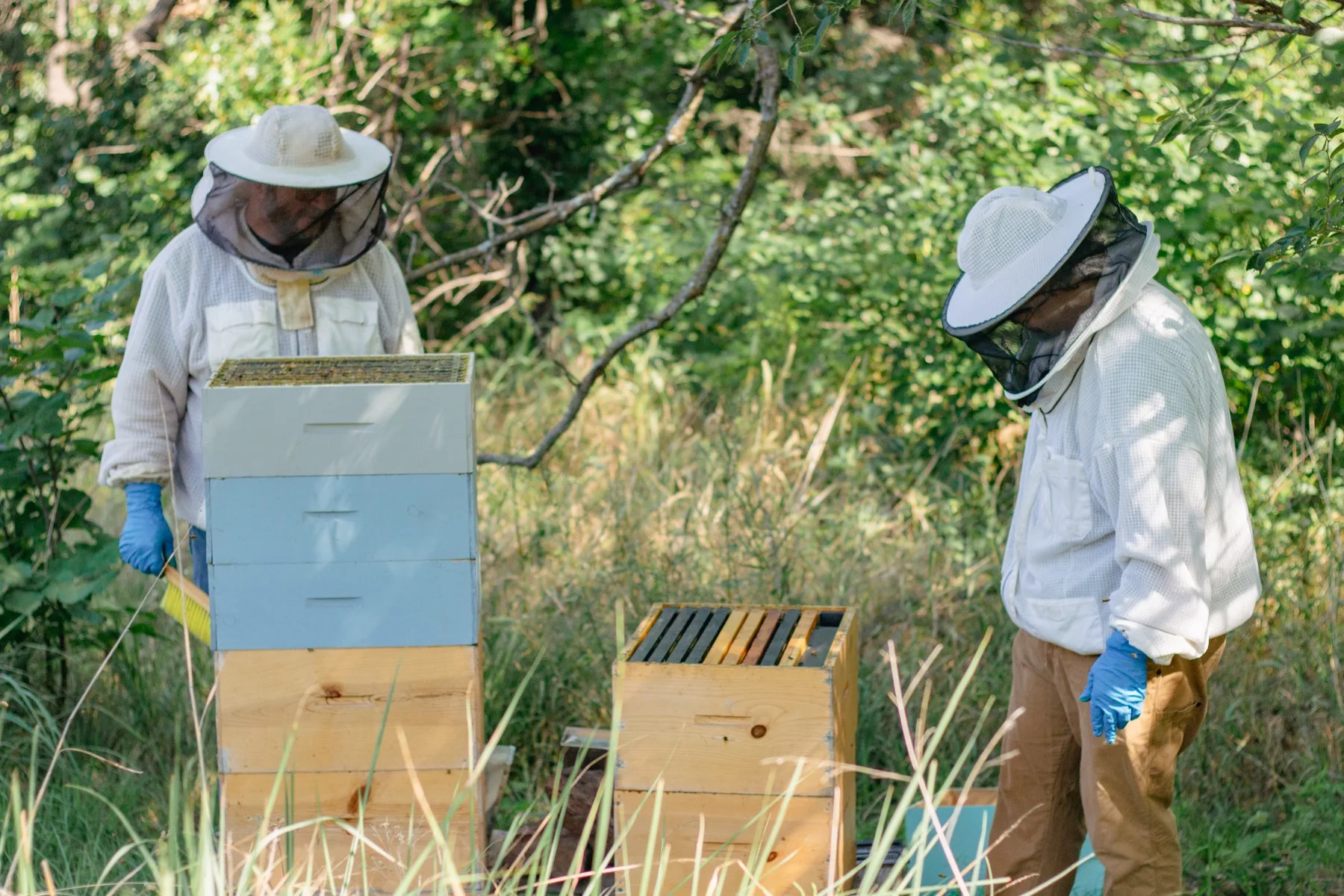
Year One
What You Will Need to Buy First Year
| Deep Hive Boxes | Deep Frames | Deep Foundation |
| Medium Hive Boxes | Medium Frames | Medium Foundation |
| Bottom Board | Vented Inner Cover | Telescoping Lid |
| Hive Stand | Hive Tool | Hive Brush |
| Feeder (top board) | Queen Cage | Queen Excluder |
| Hive Entrance Reducer | Ratchet Strap | Small Hive Beetle Traps |
| Sugar | Small Toolbox |
Must Also Have
- Storage space for all equipment when not being used on hive
Hive Setup
Build a Hive That's Right for You
Talk to any beekeeper who's made it past their first season, and you'll find they have strong opinions about setting up a starter hive. We're fortunate to be working in a time when the options available to new beekeepers are better than ever. We won't pretend there's one "right" way to do it—there isn't—but we can walk you through the decision-making process.
First, get a mental picture of how you'd like your hive to look, and make peace with the fact that it probably won't stay that way. If your plan is one white hive, one blue hive, and one with hand-painted flowers, be prepared for reality to intervene: that white hive may end up with a floral bottom box, a blue top box, and a plain honey super. Components get mixed and matched over time, and that's just part of beekeeping. With that in mind, let's look at the general hive setup.
A traditional hive consists of a
- Wooden telescoping outer lid
- Vented wooden inner cover
- Wooden boxes and frames
- Wax foundation
- and a wooden bottom board resting on a hive stand or cinder blocks
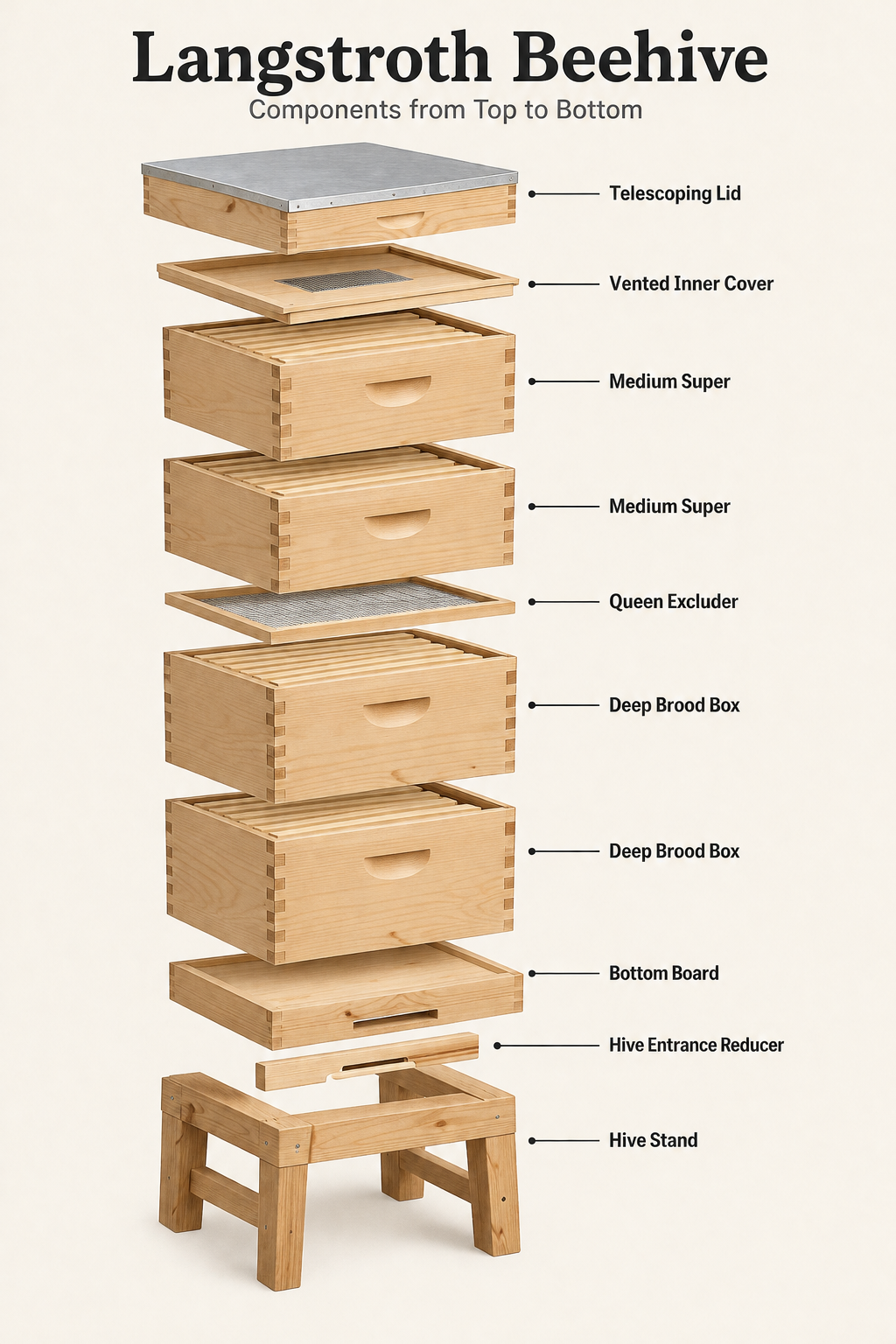
It can be finished with a low-VOC exterior paint or wax-dipped for extra protection. A wax-dipped hive cannot be painted over, it will always look like wood.
This setup tends to appeal to beekeepers who want an experience as close to traditional, natural methods as possible.
That said, it comes with a few known challenges. Bees don't always cooperate with the foundation; they may chew it up and rebuild elsewhere in the hive rather than following the pattern you've given them. Extracting honey can also "blow out" the foundation, making the drawn comb harder to reuse. And assembling the frames and wiring in the foundation has its own learning curve that takes time to master.
The good news is that every component of this setup can be swapped out for more durable, easier-to-manage alternatives as you go.
We're always happy to talk through your hive setup and answer any questions along the way
Compare Builds
Quick Comparison
| Build | Components | Foundation | Assembly Requirement | Plastic Free | Starting Prices |
|---|---|---|---|---|---|
| Traditional Hive | Wood | Wax | Frames and wire in wax | Yes | Starting at $350 |
| Modified Hive | Wood and plastic | Wax-coated plastic | Frames | No | Starting at $320 |
| Modern Hive | Wood and plastic | Wax-coated plastic | None | No | Starting at $250 |
Get Started
Ready to Start Your Hive?
You own the bees and the hive. We handle the care. Next steps: tell us about your yard and we will figure out what fits.